

Difference Between Magnesium Glycinate and Bisglycinate: Are They Actually the Same Thing?
Table of Contents
If you are auditing your supplement stack to optimize your biological hardware, you have likely run into a confusing terminology barrier. You are trying to find the definitive difference between magnesium glycinate and bisglycinate to ensure you are buying the highest-grade patch for your nervous system.
The supplement market is flooded with conflicting labels, aggressive marketing, and pseudo-scientific noise. When your goal is absolute cognitive dominance, high-quality sleep, and physical recovery, you cannot afford to install low-tier code into your biochemical architecture.
This technical brief deconstructs the molecular reality of these two popular mineral forms. We will analyze the data, bypass the marketing smoke and mirrors, and give your bio-hardware the exact technical upgrade it requires.
The Executive Hook (Direct Answers)
- Difference between magnesium glycinate and bisglycinate is entirely non-existent at a chemical, molecular, or biological level.
- Bisglycinate is the precise, internationally recognized scientific nomenclature used by chemists to define a single magnesium atom bound to two glycine molecules.
- Glycinate is a commercial shorthand moniker deployed by supplement manufacturers for clean label design and mainstream consumer marketing.
- Bioavailability and absorption remain identical across both labels because your system routes them through the exact same intestinal dipeptide channels.
- The real threat to your biological system isn’t the name; it is unchelated, low-grade mineral counterfeits hidden inside proprietary blends.
The Molecular Blueprint:
Glycinate vs. Bisglycinate Explained
To understand why these terms cause so much confusion, we must run a code audit on the basic molecular structure of chelated minerals. Your body cannot efficiently process raw elemental metals; they must be bound to a carrier molecule to bypass cellular firewalls safely.
In the scientific community, the prefix “bis” originates from Greek, translating directly to “twice” or “two.” Therefore, the term magnesium bisglycinate tells you the exact chemical ratio inside the capsule.
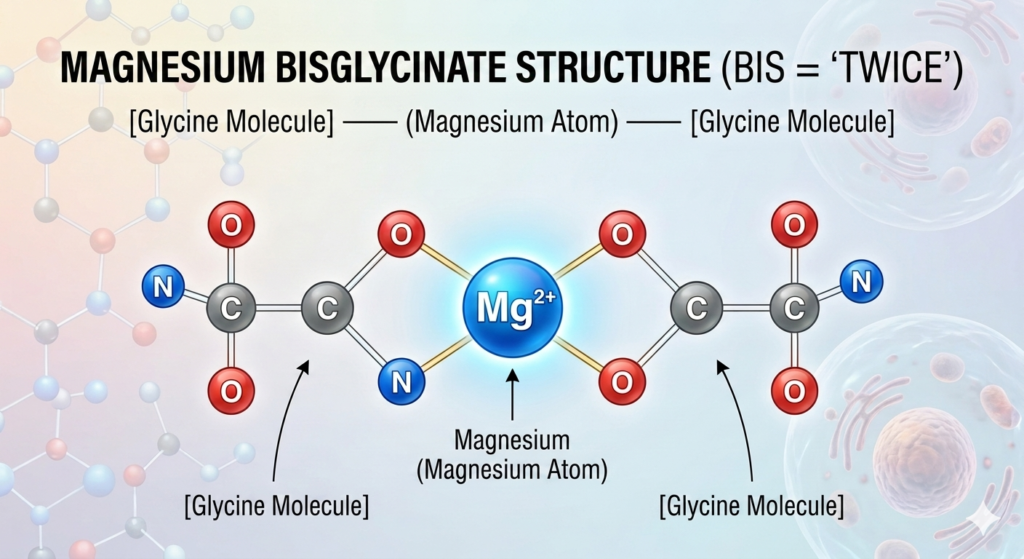
When a manufacturer uses the word magnesium glycinate, they are simply dropping the prefix for brevity. It is a linguistic shortcut, not a distinct chemical formulation or a separate manufacturing process.
What Does Chelation Mean
for Your Bio-Hardware?
Raw, unchelated minerals act like malicious software inside your digestive tract. They pull water into the intestines, cause severe cramping, and have an incredibly low absorption bandwidth.
Chelation stability is the chemical process of wrapping the elemental magnesium atom inside an organic amino acid envelope. By bonding the mineral to glycine, the molecule becomes incredibly stable and highly shielded from destructive stomach acids.
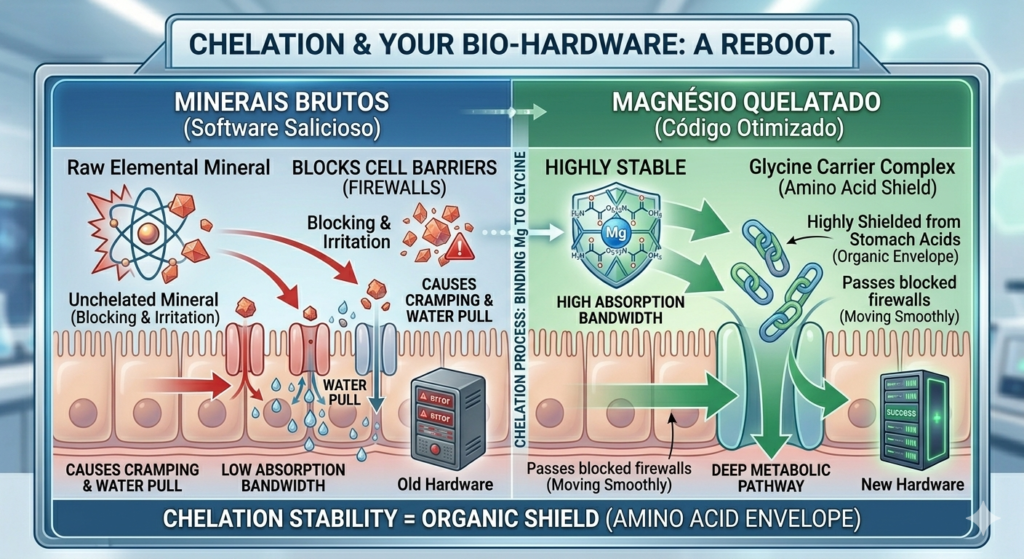
This organic shield prevents the magnesium from binding with phytates or oxalates in your diet. Instead of getting blocked by digestive firewalls, the entire complex moves smoothly into your deep metabolic pathways.
Absorption Kinetics: The
Difference Between Magnesium Glycinate and Bisglycinate in Your Gut
When evaluating the difference between magnesium glycinate and bisglycinate regarding biological performance, we must look at how the human gut manages nutrient transport lanes. Your intestinal wall uses highly specific gates to absorb nutrients.
Standard mineral forms, like magnesium oxide or sulfate, rely heavily on ion channels that easily clog. When these channels face heavy traffic, your system drops the data packets, leading to poor absorption and laxative side effects.
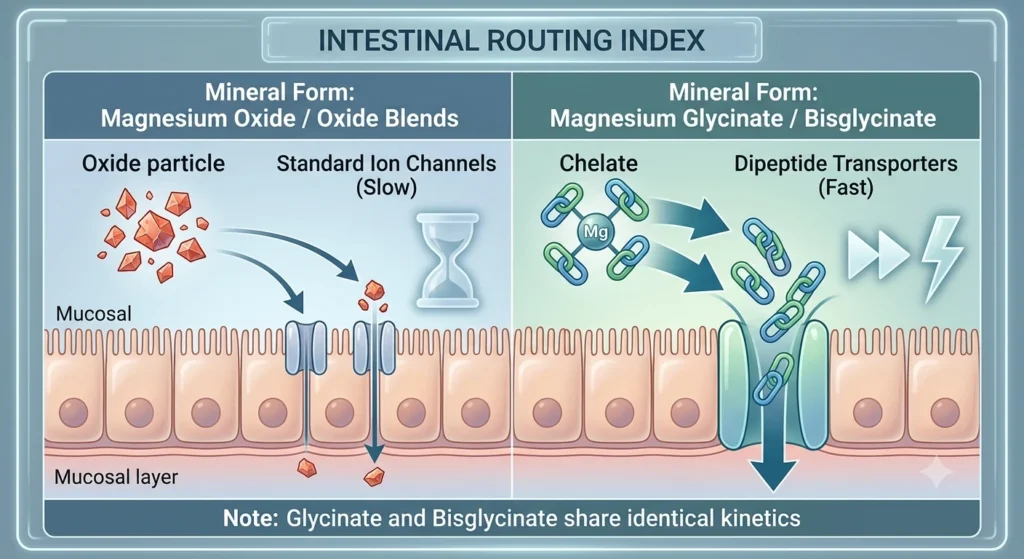
Because glycine bioavailability is exceptionally high, the chelated molecule takes an entirely different routing path. It does not wait in line at the standard mineral ion gates.
Bypassing the Standard Mineral Pathway
The chelated complex is recognized by your body as a protein fragment rather than a raw mineral. It utilizes specialized dipeptide intestinal transporters (PEPT1) to cross the mucosal barrier.
This alternative routing allows for massive absorption efficiency without saturating your primary mineral receptors. Because the molecule stays fully intact during transit, it does not pull water into your colon, entirely eliminating gastric distress.
Whether your supplement bottle reads magnesium glycinate or magnesium bisglycinate, your PEPT1 transport lanes process them identically. The internal bandwidth, absorption speed, and systemic yield remain completely unchanged.
The Neural Impact: Brain Performance and the Zombie Effect
For executives and high-performers, the primary reason to deploy this specific mineral upgrade is to optimize neurological neurotransmitters. Your brain requires deep recovery cycles to purge metabolic waste and clear out cognitive malware.
Glycine acts as a powerful inhibitory neurotransmitter in its own right. When it enters the central nervous system alongside magnesium, it directly binds to NMDA receptors, signaling the brain to down-regulate stress cascades.
This down-regulation dampens peripheral noise, lowers baseline cortisol, and prepares your neural hardware for deep, restorative slow-wave sleep. It effectively clears out the cognitive debris built up over a brutal workday.
However, a subset of high-performers experiences a bizarre paradox known as the magnesium glycinate zombie effect. Instead of waking up refreshed, they experience profound brain fog, emotional flattening, and an inability to boot up their mental systems.
Protecting Your Firewall Against Cognitive Drains
This “zombie effect” occurs when an individual’s unique neurochemical wiring reacts negatively to an excess of glycine. If your system already has high baseline levels of glutamate or specific genetic variations in NMDA receptor sensitivity, the massive influx of glycine can cause an unexpected biochemical bottleneck.
It is crucial to understand that shifting from a brand labeled magnesium glycinate to one labeled magnesium bisglycinate will not fix this specific cognitive glitch. Because they are the exact same compound, both will deliver identical amounts of glycine to your neural firewall.
If you are experiencing this systemic slowdown, the solution is not changing the brand name. You must either scale down your dosage or shift your stack toward alternative chelation pathways, such as Magnesium L-Threonate for pure focus, or Magnesium Malate for cellular energy production.
Elemental Magnesium Yield: Reading the Supplement Facts Label
The real danger in the supplement market is not a linguistic variance; it is deceptive labeling architecture. To protect your financial and biological capital, you must learn to read a Supplement Facts label like a senior systems auditor.
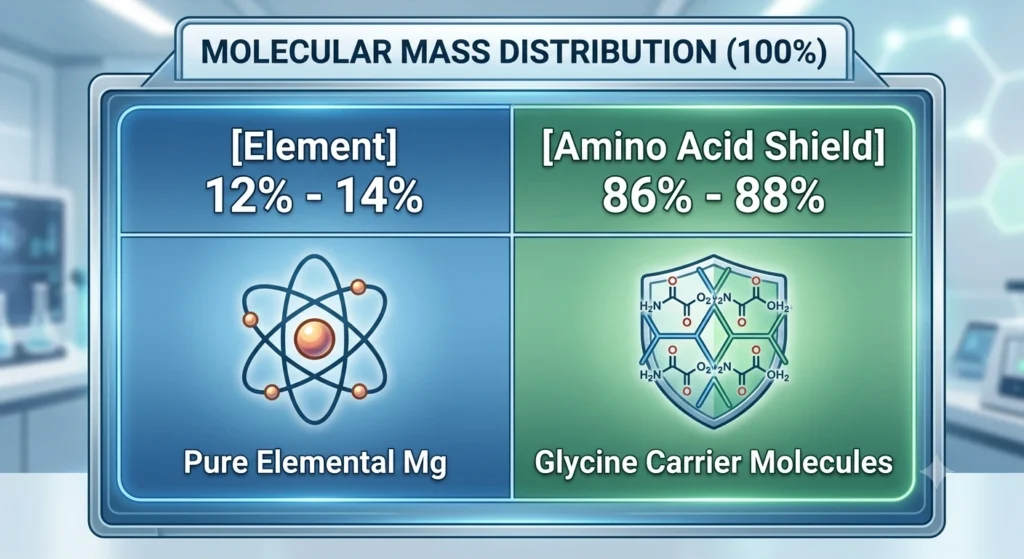
Pure, fully reacted chelate molecules have a fixed, unalterable physical reality. Because a single atom of magnesium must be bound to two bulky molecules of glycine, the actual weight of the elemental magnesium can only ever reach about 12% to 14% of the total molecular mass.
❌ DECEPTIVE LABEL ARCHITECTURE (Buffered Blend)
Magnesium (as Magnesium Bisglycinate Chelate and Magnesium Oxide) …… 200mg
HONEST LABEL ARCHITECTURE (Fully Reacted)
Magnesium (from 1,600mg Magnesium Glycinate Chelate) ……………… 200mg
When a brand balances their formula with cheap magnesium oxide, they call it a “buffered” blend. The oxide molecule is tiny, allowing them to artificially spike the elemental yield on the label while destroying the actual bioavailability of the product.
This cheap substitution reintroduces the exact laxative issues and poor absorption rates you were trying to bypass in the first place. Whether the front of the bottle screams magnesium glycinate or magnesium bisglycinate, always audit the back of the label for hidden oxide buffering.
Final Verdict: Which Software Patch
Should You Install?
When we strip away the marketing noise, the scientific verdict is definitive. There is absolutely zero biochemical difference between magnesium glycinate and bisglycinate. They are identical software patches wrapped in different consumer packaging.
- Select bisglycinate if you prefer precise, laboratory-grade scientific transparency on your labels.
- Select glycinate if you are buying from a trusted, third-party tested brand that simply prefers streamlined marketing terms.
Your core focus must remain entirely on sourcing a fully reacted chelate that is 100% free of hidden magnesium oxide buffers. Ensure your manufacturer provides independent lab assays verifying the absence of heavy metals and fillers.
By treating your nutritional stack with the strict scrutiny of an enterprise system audit, you protect your body from low-tier formulas, unlock clean cellular performance, and ensure your biological hardware runs at peak processing capacity.
FAQ
⚠️ Medical Disclaimer:
The information contained on ReviewLab.click is for educational, informational, and auditing purposes only. We do not provide medical advice, diagnosis, or prescription treatments. The analysis of supplements and biological protocols is based on the review of available scientific literature and market formulations. Always consult a qualified healthcare professional or physician before introducing any new supplement or modifying your health routine.