
Biomechanics of Strength Training: Precision Force
Biomechanics of strength training is the exact science of manipulating force vectors, moment arms, and torque to force structural adaptation. Yet, most high-performing executives and corporate athletes run this heavy mechanical software on compromised biological hardware. When your movement patterns violate the laws of physics, you aren’t driving muscular hypertrophy—you are simply generating metabolic debris, compounding axial joint stress, and triggering a systemic bottleneck.
To maximize output, your neuro-mechanical system must be treated like a high-performance engine: every lever requires optimal alignment, and every cellular circuit demands precision fueling.
1. Diagnosing Mechanical Failure:
Levers, Torque, and Wasted Kinetic Energy
The Force Vector Bug: Why execution
failure destroys hypertrophic signaling
Every joint in the human body operates as a mechanical lever system. When executing a lift, the distance between the joint axis and the line of force action determines the moment arm. A minor deviation in your setup alters this vector, shifting the structural load away from the target tissue and onto passive stabilizers like tendons and lumbar disks.
This mechanical leakage creates an inefficient transfer of kinetic energy. Instead of maximizing high-threshold motor unit recruitment, the nervous system encounters structural resistance, hitting an artificial ceiling. When execution is flawed, the primary driver of hypertrophy—mechanical tension—is replaced by destructive joint friction.
[System Input: Improper Vector] ──> [Energy Leakage] ──> [Joint Friction] ──> System Crash (Injury)
[System Input: Optimized Vector] ──> [Maximum Torque] ──> [Target Tension] ──> System Upgrade (Gains)
2. The Chemical Hardware Upgrade: The Biochemical Dependence on Muscle Contraction
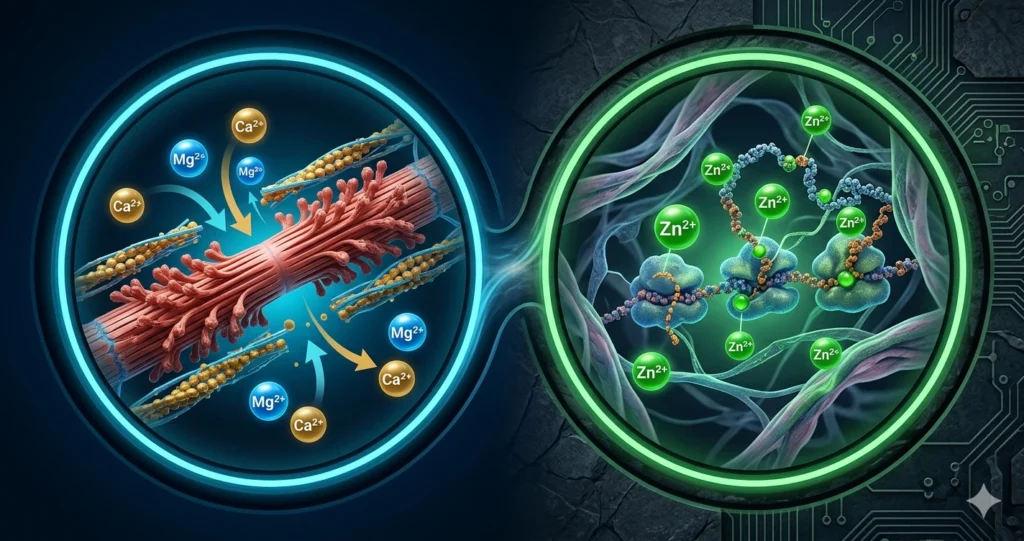
Beyond Torque: Why Magnesium and
Zinc Control the Molecular Cross-Bridge Cycle
Mastering levers and torque is critical for mechanical efficiency, but your cellular infrastructure requires biochemical support. Ensuring proper [ magnesium-and-zinc-benefits ] is non-negotiable for ATP production and preventing structural cramping during high-load execution.
At the microscopic level, muscle contraction relies on the actin-myosin cross-bridge cycle. While calcium acts as the ignition switch for contraction, magnesium is the essential engine component required to clear calcium from the sarcoplasm, allowing the muscle fibers to relax and reset. Without sufficient magnesium, the cellular engine suffers from constant micro-spasms and metabolic inefficiency.
Simultaneously, clinical data indicates that zinc serves as a critical structural component for tissue remodeling. The intense mechanical tension generated by optimized biomechanics triggers an immediate immune and endocrine repair sequence; auditing this process reveals that a deficiency in zinc effectively stalls protein synthesis, leaving your hardware vulnerable to chronic overtraining syndromes.
| Nutrient | Primary Mechanical/Biochemical Function | System Impact of Deficiency |
| Magnesium | Regulates ATP hydrolysis; controls calcium reuptake for myofibrillar relaxation. | Neural misfires, localized cramping, elevated baseline muscle tension. |
| Zinc | Catalyzes enzyme systems for cellular repair; modulates protein synthesis pathways. | Delayed structural recovery, compromised immune response, tissue degradation. |
3. Fuel Optimization and Hormonal
Signaling for Maximum Loads
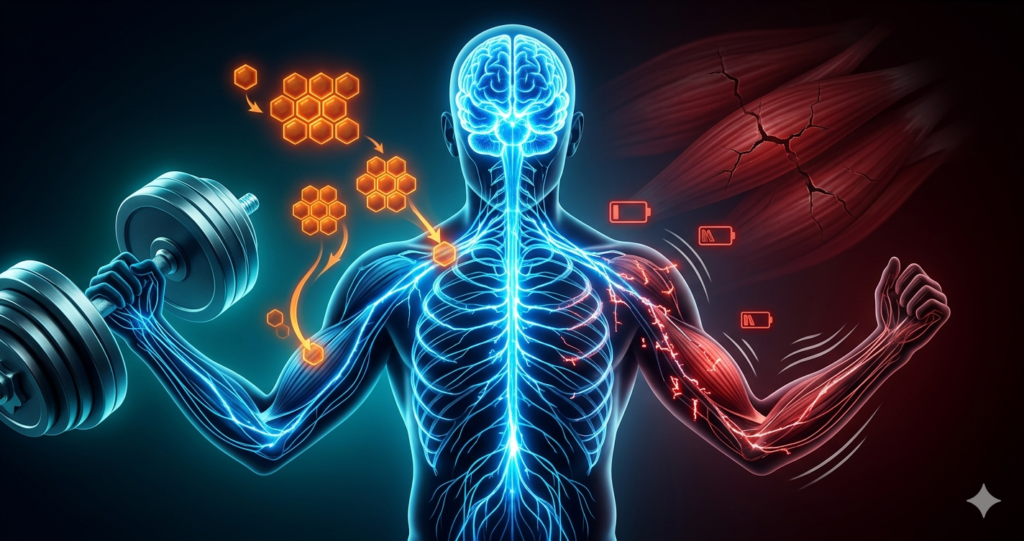
Neural Bandwidth: High-Performance
Nutrition and Retained Glycogen
Generating maximum force production requires your systems to be fully fueled. Integrating a protocol of [ high-performance-nutrition ] ensures your nervous system has the clean energy required to sustain cognitive focus and precise form under heavy iron.
Heavy resistance training is a highly demanding neurological event. Before a single muscle fiber contracts, the central nervous system (CNS) must fire high-frequency electrical signals to recruit high-threshold motor units. If your systemic glycogen stores are depleted, or if your brain lacks steady substrate availability, the CNS downregulates its electrical output to preserve vital organs.
This neural throttling destroys your biomechanical precision; your movement patterns degrade, and your body enters a catabolic state, burning through structural assets instead of building them.
[Glycogen Depletion] ──> [CNS Output Throttled] ──>
[Biomechanical Failure] ──> Compensatory Movement
The Endocrine Firewall: Testosterone
Modulation via Correct Mechanical Tension
Applying correct biomechanical tension doesn’t just build localized tissue; it signals the entire endocrine system to spike your [testosterone optimization ] pathways, accelerating systemic recovery and protein synthesis.
When compound movements are executed with perfect mechanical alignment, the profound neurological and physical stress forces a systemic adaptation. The endocrine system responds by optimizing its hormonal output, increasing the density of androgen receptors within the targeted muscle groups.
However, if your biomechanics are faulty, the resulting chronic joint inflammation drives up systemic cortisol. This biochemical environment acts like malware, actively blocking testosterone binding sites and shifting your metabolism into a state of chronic degradation. Perfect biomechanical execution serves as the ultimate natural catalyst to optimize your hormonal profile.
FAQ
⚠️ Medical Disclaimer:
The content on ReviewLab.click is strictly for informational, educational, and biohacking self-experimentation tracking purposes. We are not medical doctors, and this technical analysis does not constitute medical advice, diagnosis, or treatment. Never disregard professional medical advice or delay seeking it because of something you have read on this website. Always consult with a licensed physician or endocrinologist before introducing new botanical extracts or altering your metabolic protocol.